Event cameras have received extensive research interest because of their advantages over conventional cameras in high-speed motion and high-dynamic-range (HDR) environments. In this article, we present a polarity-aided event–visual–inertial odometry system (PA-EVIO) that integrates the time-surface generation module, the feature processing module, and the state estimator module. Unlike the exponential decay with a fixed decay rate, the event adaptive decay, based on an event activity model, adjusts the decay rate according to the dynamics of the event stream and provides better texture performance. We propose a compensation method to enhance the robustness of feature tracking with polarity-weighted time surfaces and alleviate the adverse effect of polarity fluctuations caused by motion direction changes. The proposed odometry leverages the advantages of event cameras while also incorporating visual information to enhance robustness, particularly in scenarios where the event data is sparse or the image data is of good quality. We conduct extensive experiments to evaluate the proposed method, covering scenarios with high dynamic range and aggressive motion speed. The results from the DAVIS240C, HKU-Arclab, and UZH-FPV datasets indicate that our method outperforms other EIO and EVIO methods with real-time performance. The code will be released at https://github.com/APRIL-ZJU/PA-EVIO.
CVPR
Drive-Cascade: Autoregressive Occupancy to LiDAR and Video Synthesis
Shuangming Lei*, Yuehao Huang*, Yi Yao, and 11 more authors
Mobile robots are increasingly required to navigate and interact within unknown and unstructured environments to meet human demands. Demand-driven navigation (DDN) enables robots to identify and locate objects based on implicit human intent, even when object locations are unknown. However, traditional data-driven DDN methods rely on pre-collected data for model training and decision-making, limiting their generalization capability in unseen scenarios. In this paper, we propose CogDDN, a VLM-based framework that emulates the human cognitive and learning mechanisms by integrating fast and slow thinking systems and selectively identifying key objects essential to fulfilling user demands. CogDDN identifies appropriate target objects by semantically aligning detected objects with the given instructions. Furthermore, it incorporates a dual-process decision-making module, comprising a Heuristic Process for rapid, efficient decisions and an Analytic Process that analyzes past errors, accumulates them in a knowledge base, and continuously improves performance. Chain of Thought (CoT) reasoning strengthens the decision-making process. Extensive closed-loop evaluations on the AI2Thor simulator with the ProcThor dataset show that CogDDN outperforms single-view camera-only methods by 15%, demonstrating significant improvements in navigation accuracy and adaptability. The project page is available at https://yuehaohuang.github.io/CogDDN/.
IROS
SparseWorld: Enhancing End-to-End Autonomous Driving via World Models with Sparse Scene Representation
Ruoyu Wang*, Jingke Wang*, Yukai Ma, and 5 more authors
Recently, world models have made significant progress in enhancing end-to-end driving systems through both future situation forecasting and improved scene understanding. However, existing driving world models are typically built upon dense scene representations, causing high computational costs and redundant information. In this paper, we present SparseWorld, a lightweight world model that focuses on predicting only the critical layout of the scene, enabling efficient future forecasting for end-to-end driving systems. SparseWorld first performs autoregressive rollout to forecast future map elements and surrounding agents, enabling the model to learn how driving scenarios evolve over time. It then leverages these predicted futures to refine downstream motion prediction and trajectory planning. Specifically, we propose a Sparse Dreamer that anticipates future instances in the latent space through joint temporal and spatial attention. By interacting with predicted future instances, the motion planner captures more accurate motion patterns and generates more informed and safety-aware trajectories. Extensive experiments demonstrate that SparseWorld significantly reduces collision risk and achieves state-of-the-art performance on the open-loop planning metrics of the nuScenes dataset with a collision rate of 0.05%. Moreover, it substantially outperforms the baseline method in closed-loop planning metrics on the Bench2Drive benchmark. Supplementary material is available at the project page: https://wryzju.github.io/SparseWorld/.
ArXiv
GN0: Toward a Unified Paradigm for Generation, Evaluation, and Policy Learning in Visual-Language Navigation
Xinhai Li*‡, Xiaotao Zhang*, Yuehao Huang*, and 10 more authors
Recently, world models have made significant progress in enhancing end-to-end driving systems through both future situation forecasting and improved scene understanding. However, existing driving world models are typically built upon dense scene representations, causing high computational costs and redundant information. In this paper, we present SparseWorld, a lightweight world model that focuses on predicting only the critical layout of the scene, enabling efficient future forecasting for end-to-end driving systems. SparseWorld first performs autoregressive rollout to forecast future map elements and surrounding agents, enabling the model to learn how driving scenarios evolve over time. It then leverages these predicted futures to refine downstream motion prediction and trajectory planning. Specifically, we propose a Sparse Dreamer that anticipates future instances in the latent space through joint temporal and spatial attention. By interacting with predicted future instances, the motion planner captures more accurate motion patterns and generates more informed and safety-aware trajectories. Extensive experiments demonstrate that SparseWorld significantly reduces collision risk and achieves state-of-the-art performance on the open-loop planning metrics of the nuScenes dataset with a collision rate of 0.05%. Moreover, it substantially outperforms the baseline method in closed-loop planning metrics on the Bench2Drive benchmark. Supplementary material is available at the project page: https://wryzju.github.io/SparseWorld/.
IROS
SAGE-Nav: Leveraging LLM Planning and Alignment Fusion for Hierarchical Scene Graph-Guided Navigation
Hao Su*, Yuehao Huang*, Yukai Ma, and 2 more authors
Object-Goal Navigation (ObjNav) requires embodied agents to autonomously locate specified targets relying exclusively on egocentric visual observations. Current monolithic methods often struggle with long-horizon reasoning and exhibit suboptimal generalization in novel environments. To overcome these limitations, we propose SAGE-Nav, a novel hierarchical framework that integrates the reasoning capabilities of Large Language Models (LLMs) with dynamic scene graphs. Crucially, our architecture effectively decouples asynchronous global semantic planning from the high-frequency reactive control loop. The LLM acts as a global planner, decomposing abstract instructions into a sequence of semantically grounded waypoints. To translate these plans into dense multimodal guidance, we design a Hierarchical Scene Graph Encoder (HSGE) that leverages relational graph convolutions to produce structure-aware embeddings preserving both semantic and spatial topology. Furthermore, we develop the Goal-aware Alignment-Fusion Network (GAFN) to dynamically fuse real-time perception with these structural priors. By utilizing an adaptive gating mechanism with an explicit inductive bias, GAFN ensures robust visual-topological alignment for the low-level policy. Extensive evaluations in the AI2-THOR and RoboTHOR environments demonstrate that SAGE-Nav achieves state-of-the-art performance, showcasing substantial gains in navigation efficiency and zero-shot generalizability while maintaining the minimal control latency necessary for physical robotic deployment.
ArXiv
DriveStack-VLA: Render-Teacher Alignment for BEV-Based DeepStack Vision-Language-Action Model
Jingke Wang*, Zhenru Zhao*, Shuangming Lei, and 8 more authors
Vision-Language-Action driving models convert a pretrained Vision-Language Model into a driving policy, allowing them to use world knowledge and follow language guidances. However, existing VLA driving models still lack driving-oriented spatial intelligence: their policies are mainly grounded on perspective image tokens and language priors, while precise motion planning requires metric geometry, top-down scene structure, and attention to safety-critical perceptual cues. This limitation makes current models vulnerable to weak visual geometry modeling and perceptual coverage in expert demonstrations. In this paper, we present DriveStack-VLA, a framework built upon a large VLM backbone. To strengthen the spatial grounding of VLA driving, we develop dual visual modeling components. We inject a Bird-Eye-View representation into the Large Language Model decoder through a DeepStack-style connection, and propose Render-Teacher Alignment to align the perceptual focus of real images with that of rasterized images. Furthermore, to bridge the gap in multimodal trajectory selection, we introduce a head-based self-critique module that ranks sampled trajectories and conditionally refines the best one. DriveStack-VLA achieves 91.6 PDMS on NAVSIMv1, 91.0 EPDMS on NAVSIMv2 (with the human penalty filter enabled), and a driving score of 79.49 with a success rate of 56.36% on the closed-loop Bench2Drive. More visualizations are available on our project page: https://anonymous.4open.science/w/drivestack-vla/.
ArXiv
WNM-3D: A World Navigation Model with 3D Scene Conditioning for Closed-Loop VLN
Yuehao Huang*, Yunzi Wu*, Xiaotao Zhang*, and 7 more authors
Recent vision-language navigation (VLN) systems increasingly adapt pretrained vision-language models (VLMs) into vision-language-action (VLA) policies that map egocentric observations and language instructions directly to navigation actions. Although semantically capable, such action-centric training does not explicitly model how the agent’s visual observations should evolve under its predicted motion. Generative world-action models (WAMs) jointly predict future observations and actions, yet existing WAMs for continuous VLN do not condition joint future-view and action generation on geometry-aware representations inferred from the observed history. We present WNM-3D, a generative World Navigation Model with 3D scene conditioning for continuous VLN. To consolidate past observations into persistent scene context, a frozen feed-forward geometry encoder extracts geometry-aware representations from the monocular egocentric RGB history, and a trainable 3D Scene-to-Token Adapter converts them into a fixed-length prefix in the token space of the world-action Diffusion Transformer. Through block-causal attention, this prefix conditions every future video-action block, providing a shared geometric context for both future-view and action generation. We train WNM-3D through supervised world-action fine-tuning on A*-generated demonstrations, DAgger-style adaptation on policy-visited states, and DanceGRPO-based closed-loop policy optimization. Experiments on GN-Bench show that WNM-3D outperforms strong VLM-based navigation policies and its 2D-conditioned counterpart in closed-loop navigation. On a fixed near-goal evaluation set, WNM-3D also achieves higher flow-action consistency and lower visual-motion error.
2025
MM
CogDDN: A Cognitive Demand-Driven Navigation with Decision Optimization and Dual-Process Thinking
Yuehao Huang*, Liang Liu*, Shuangming Lei, and 7 more authors
Mobile robots are increasingly required to navigate and interact within unknown and unstructured environments to meet human demands. Demand-driven navigation (DDN) enables robots to identify and locate objects based on implicit human intent, even when object locations are unknown. However, traditional data-driven DDN methods rely on pre-collected data for model training and decision-making, limiting their generalization capability in unseen scenarios. In this paper, we propose CogDDN, a VLM-based framework that emulates the human cognitive and learning mechanisms by integrating fast and slow thinking systems and selectively identifying key objects essential to fulfilling user demands. CogDDN identifies appropriate target objects by semantically aligning detected objects with the given instructions. Furthermore, it incorporates a dual-process decision-making module, comprising a Heuristic Process for rapid, efficient decisions and an Analytic Process that analyzes past errors, accumulates them in a knowledge base, and continuously improves performance. Chain of Thought (CoT) reasoning strengthens the decision-making process. Extensive closed-loop evaluations on the AI2Thor simulator with the ProcThor dataset show that CogDDN outperforms single-view camera-only methods by 15%, demonstrating significant improvements in navigation accuracy and adaptability. The project page is available at https://yuehaohuang.github.io/CogDDN/.
ArXiv
MAS-Bench: A Unified Benchmark for Shortcut-Augmented Hybrid Mobile GUI Agents
Pengxiang Zhao*, Guangyi Liu*, Yaozhen Liang, and 8 more authors
To enhance the efficiency of GUI agents on various platforms like smartphones and computers, a hybrid paradigm that combines flexible GUI operations with efficient shortcuts (e.g., API, deep links) is emerging as a promising direction. However, a framework for systematically benchmarking these hybrid agents is still underexplored. To take the first step in bridging this gap, we introduce MAS-Bench, a benchmark that pioneers the evaluation of GUI-shortcut hybrid agents with a specific focus on the mobile domain. Beyond merely using predefined shortcuts, MAS-Bench assesses an agent’s capability to autonomously generate shortcuts by discovering and creating reusable, low-cost workflows. It features 139 complex tasks across 11 real-world applications, a knowledge base of 88 predefined shortcuts (APIs, deep-links, RPA scripts), and 7 evaluation metrics. The tasks are designed to be solvable via GUI-only operations, but can be significantly accelerated by intelligently embedding shortcuts. Experiments show that hybrid agents achieve significantly higher success rates and efficiency than their GUI-only counterparts. This result also demonstrates the effectiveness of our method for evaluating an agent’s shortcut generation capabilities. MAS-Bench fills a critical evaluation gap, providing a foundational platform for future advancements in creating more efficient and robust intelligent agents.
ArXiv
SimGenHOI: Physically Realistic Whole-Body Humanoid-Object Interaction via Generative Modeling and Reinforcement Learning
Yuhang Lin, Yijia Xie, Jiahong Xie, and 5 more authors
Generating physically realistic humanoid-object interactions (HOI) is a fundamental challenge in robotics. Existing HOI generation approaches, such as diffusion-based models, often suffer from artifacts such as implausible contacts, penetrations, and unrealistic whole-body actions, which hinder successful execution in physical environments. To address these challenges, we introduce SimGenHOI, a unified framework that combines the strengths of generative modeling and reinforcement learning to produce controllable and physically plausible HOI. Our HOI generative model, based on Diffusion Transformers (DiT), predicts a set of key actions conditioned on text prompts, object geometry, sparse object waypoints, and the initial humanoid pose. These key actions capture essential interaction dynamics and are interpolated into smooth motion trajectories, naturally supporting long-horizon generation. To ensure physical realism, we design a contact-aware whole-body control policy trained with reinforcement learning, which tracks the generated motions while correcting artifacts such as penetration and foot sliding. Furthermore, we introduce a mutual fine-tuning strategy, where the generative model and the control policy iteratively refine each other, improving both motion realism and tracking robustness. Extensive experiments demonstrate that SimGenHOI generates realistic, diverse, and physically plausible humanoid-object interactions, achieving significantly higher tracking success rates in simulation and enabling long-horizon manipulation tasks. Code will be released upon acceptance on our project page: https://xingxingzuo.github.io/simgen_hoi/
2024
TITS
RIDERS: Radar-Infrared Depth Estimation for Robust Sensing
Han Li*, Yukai Ma*, Yuehao Huang, and 4 more authors
IEEE Transactions on Intelligent Transportation Systems, 2024
Dense depth recovery is crucial in autonomous driving, serving as a foundational element for obstacle avoidance, 3D object detection, and local path planning. Adverse weather conditions, including haze, dust, rain, snow, and darkness, introduce significant challenges to accurate dense depth estimation, thereby posing substantial safety risks in autonomous driving. These challenges are particularly pronounced for traditional depth estimation methods that rely on short electromagnetic wave sensors, such as visible spectrum cameras and near-infrared LiDAR, due to their susceptibility to diffraction noise and occlusion in such environments. To fundamentally overcome this issue, we present a novel approach for robust metric depth estimation by fusing a millimeter-wave radar and a monocular infrared thermal camera, which are capable of penetrating atmospheric particles and unaffected by lighting conditions. Our proposed Radar-Infrared fusion method achieves highly accurate and finely detailed dense depth estimation through three stages, including monocular depth prediction with global scale alignment, quasi-dense radar augmentation by learning radar-pixels correspondences, and local scale refinement of dense depth using a scale map learner. Our method achieves exceptional visual quality and accurate metric estimation by addressing the challenges of ambiguity and misalignment that arise from directly fusing multi-modal long-wave features. We evaluate the performance of our approach on the NTU4DRadLM dataset and our self-collected challenging ZJU-Multispectrum dataset. Especially noteworthy is the unprecedented robustness demonstrated by our proposed method in smoky scenarios. Our code will be released at https://github.com/MMOCKING/RIDERS.
IROS
Monocular event-inertial odometry with adaptive decay-based time surface and polarity-aware tracking
Kai Tang, Xiaolei Lang, Yukai Ma, and 4 more authors
In 2024 IEEE/RSJ International Conference on Intelligent Robots and Systems (IROS), 2024
Event cameras have garnered considerable attention due to their advantages over traditional cameras in low power consumption, high dynamic range, and no motion blur. This paper proposes a monocular event-inertial odometry incorporating an adaptive decay kernel-based time surface with polarity-aware tracking. We utilize an adaptive decay-based Time Surface to extract texture information from asynchronous events, which adapts to the dynamic characteristics of the event stream and enhances the representation of environmental textures. However, polarity-weighted time surfaces suffer from event polarity shifts during changes in motion direction. To mitigate its adverse effects on feature tracking, we optimize the feature tracking by incorporating an additional polarityinverted time surface to enhance the robustness. Comparative analysis with visual-inertial and event-inertial odometry methods shows that our approach outperforms state-of-the-art techniques, with competitive results across various datasets.
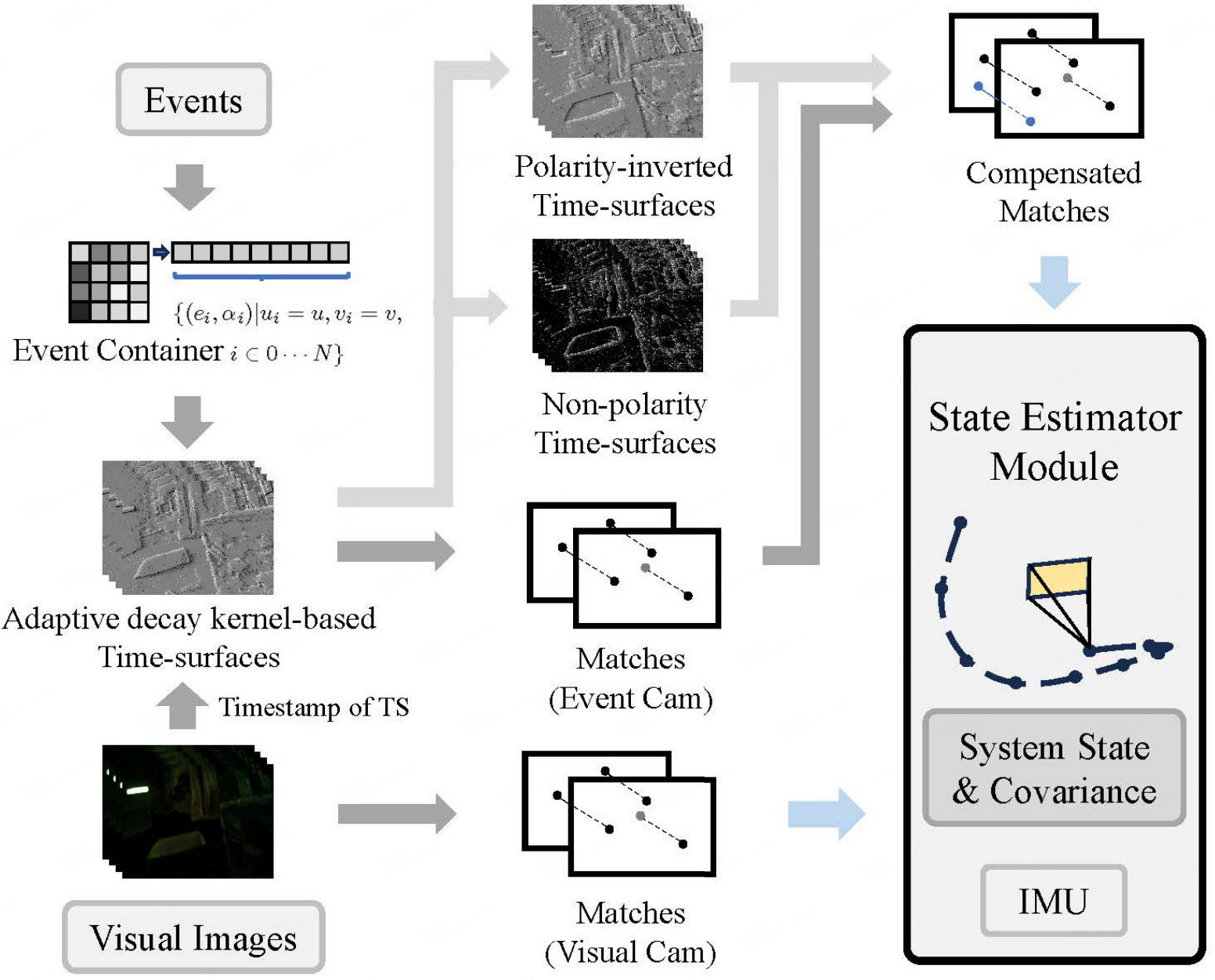 PA-EVIO: Polarity-aided Event-Visual-Inertial Odometry with Adaptive Event RepresentationKai Tang*, Xiaolei Lang*, Yukai Ma, and 6 more authorsIEEE Transactions on Instrumentation and Measurement, 2026
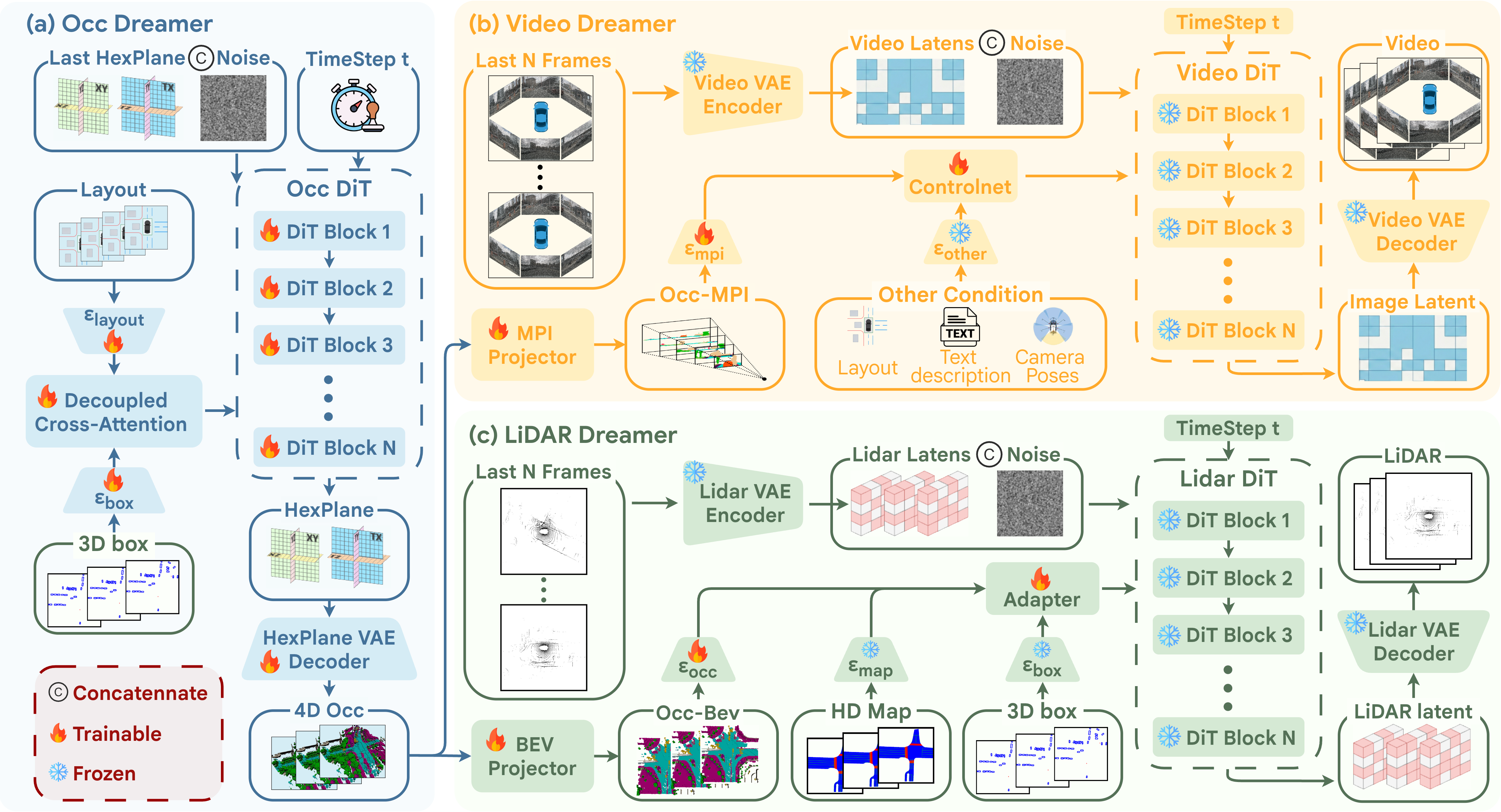 Drive-Cascade: Autoregressive Occupancy to LiDAR and Video SynthesisShuangming Lei*, Yuehao Huang*, Yi Yao, and 11 more authorsJun 2026
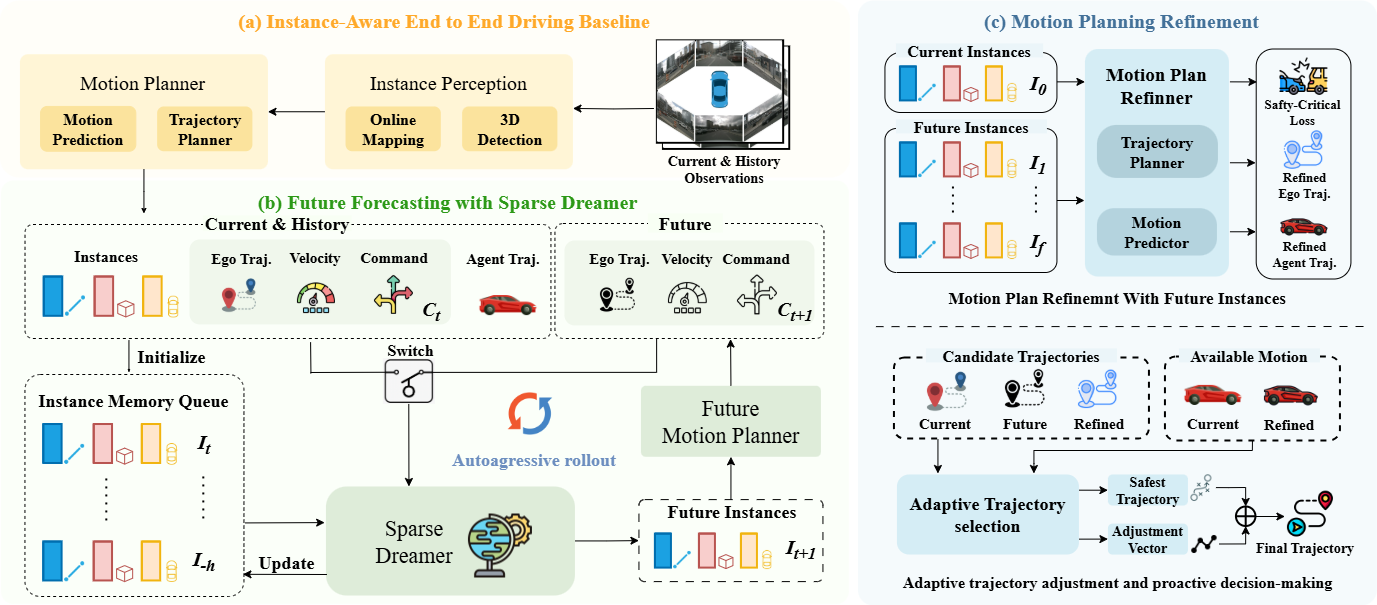 SparseWorld: Enhancing End-to-End Autonomous Driving via World Models with Sparse Scene RepresentationRuoyu Wang*, Jingke Wang*, Yukai Ma, and 5 more authorsarXiv preprint arXiv:2605.24354, 2026
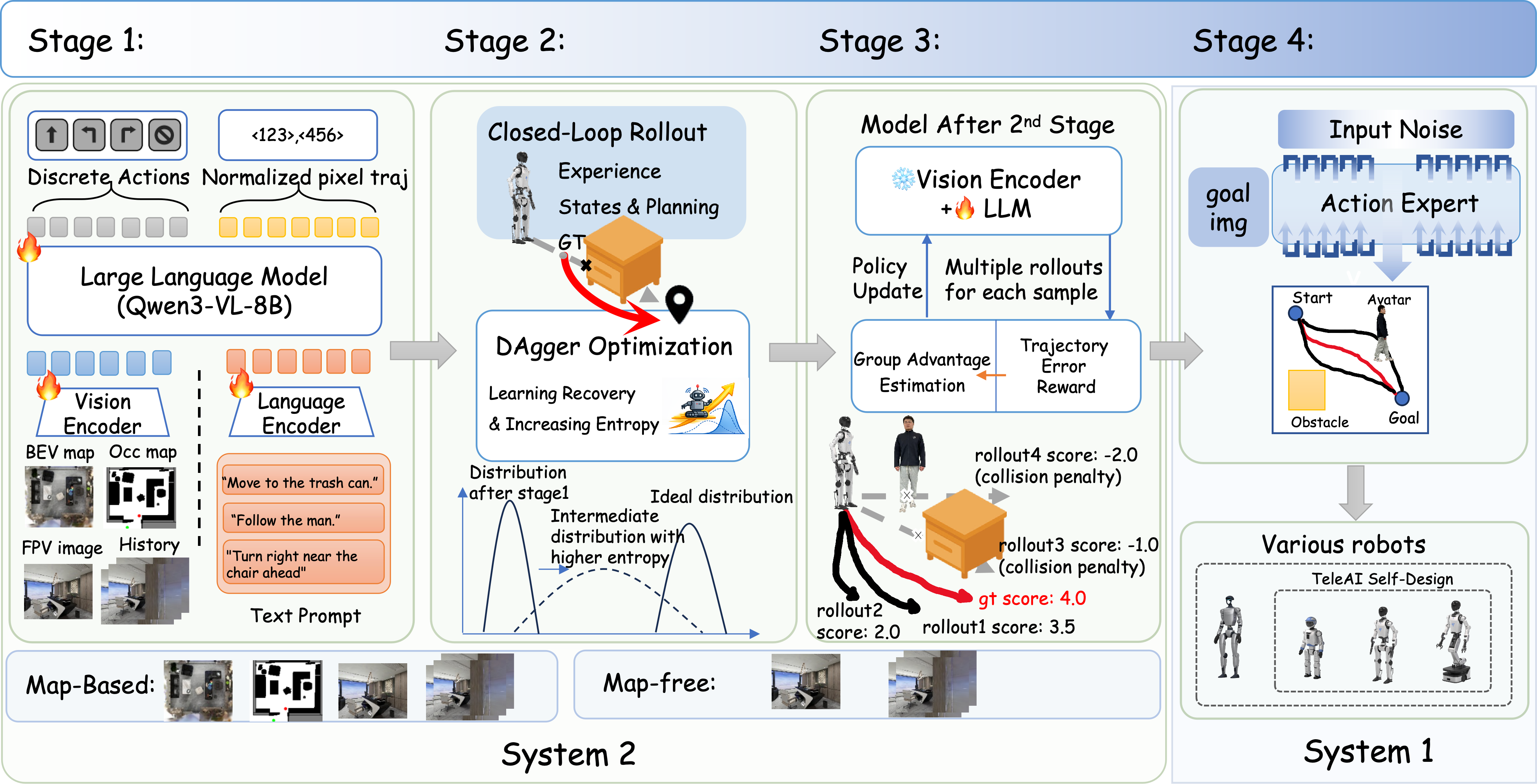 GN0: Toward a Unified Paradigm for Generation, Evaluation, and Policy Learning in Visual-Language NavigationXinhai Li*‡, Xiaotao Zhang*, Yuehao Huang*, and 10 more authorsarXiv preprint arXiv:2606.03682, 2026
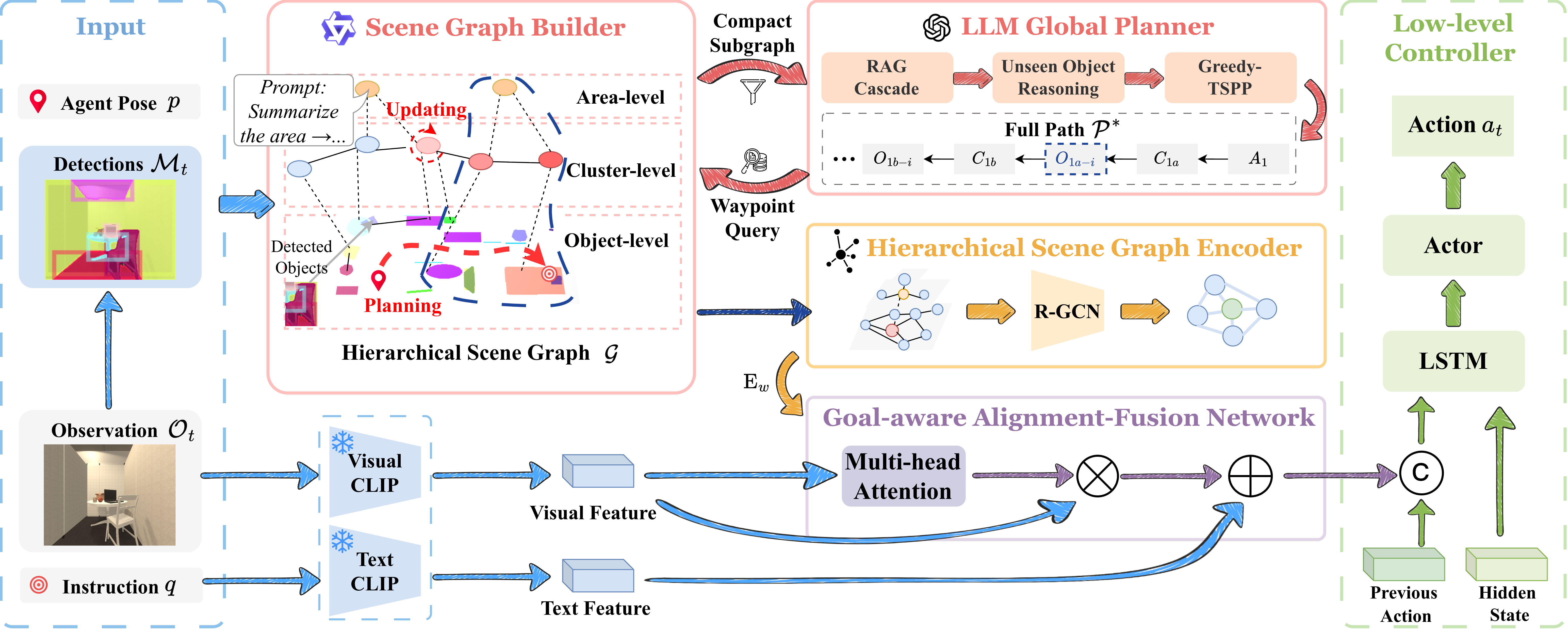 SAGE-Nav: Leveraging LLM Planning and Alignment Fusion for Hierarchical Scene Graph-Guided NavigationHao Su*, Yuehao Huang*, Yukai Ma, and 2 more authorsarXiv preprint arXiv:2606.25497, 2026
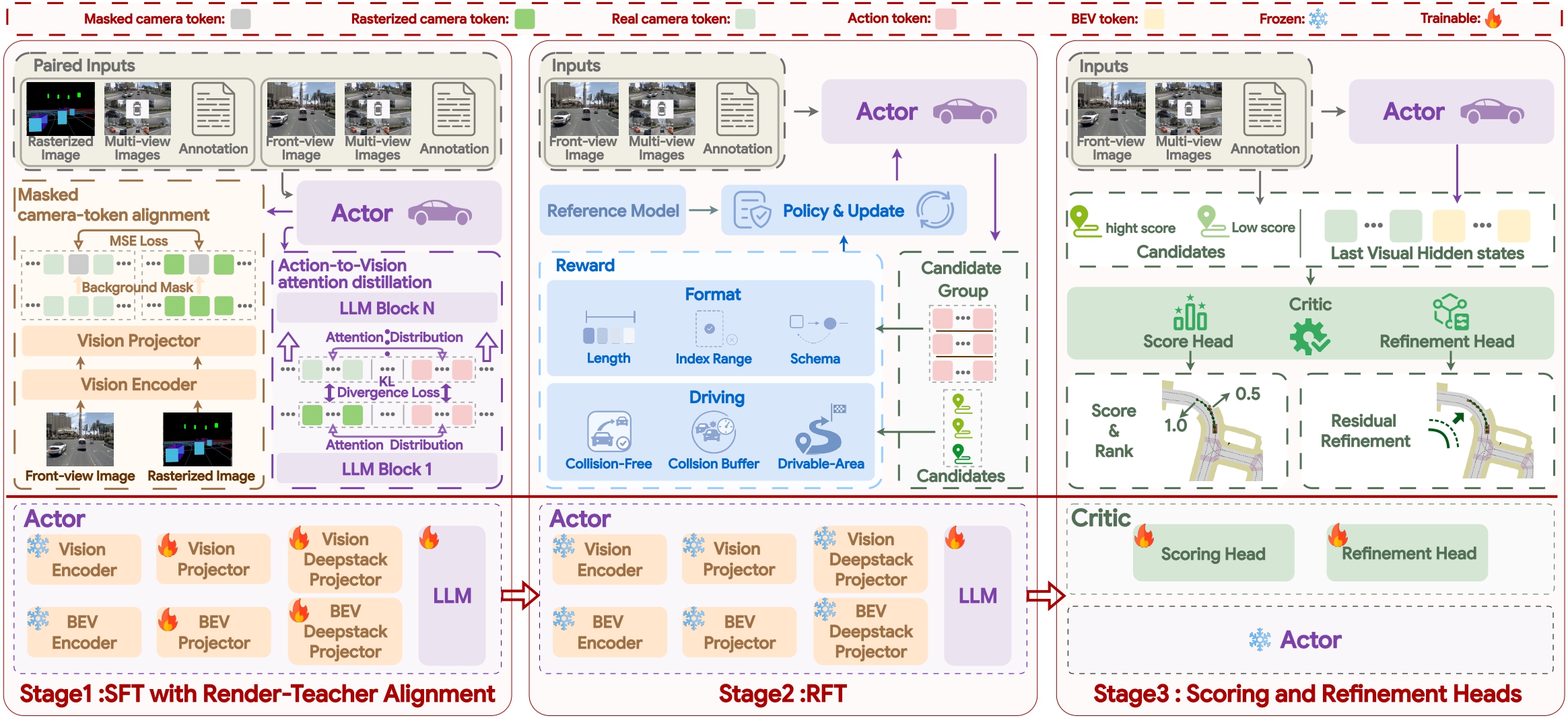 DriveStack-VLA: Render-Teacher Alignment for BEV-Based DeepStack Vision-Language-Action ModelJingke Wang*, Zhenru Zhao*, Shuangming Lei, and 8 more authorsarXiv preprint arXiv:2606.24051, 2026
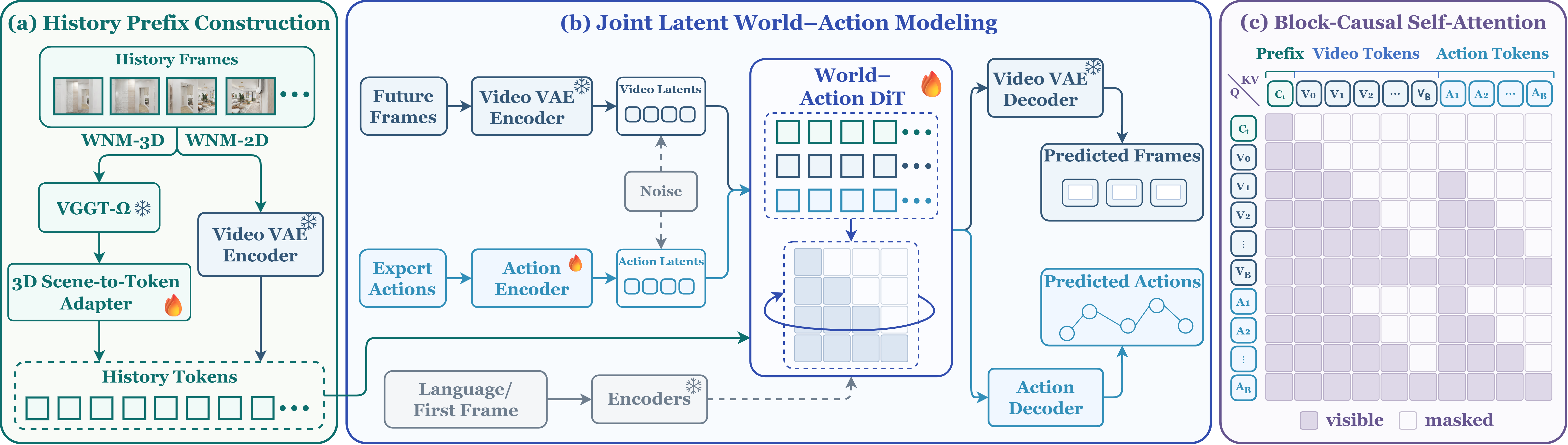 WNM-3D: A World Navigation Model with 3D Scene Conditioning for Closed-Loop VLNYuehao Huang*, Yunzi Wu*, Xiaotao Zhang*, and 7 more authorsarXiv preprint arXiv:2608.07267, 2026
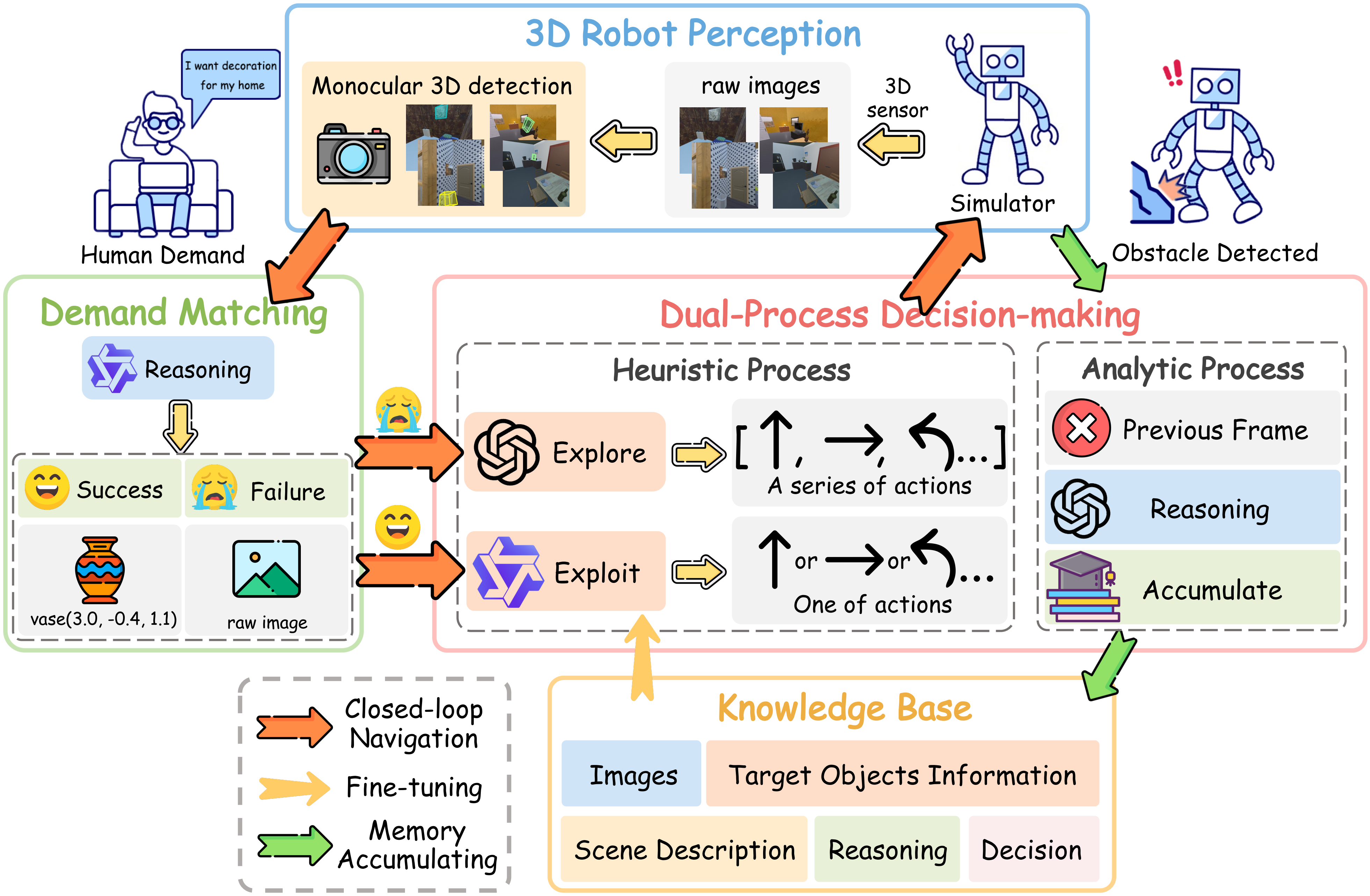 CogDDN: A Cognitive Demand-Driven Navigation with Decision Optimization and Dual-Process ThinkingYuehao Huang*, Liang Liu*, Shuangming Lei, and 7 more authorsJul 2025
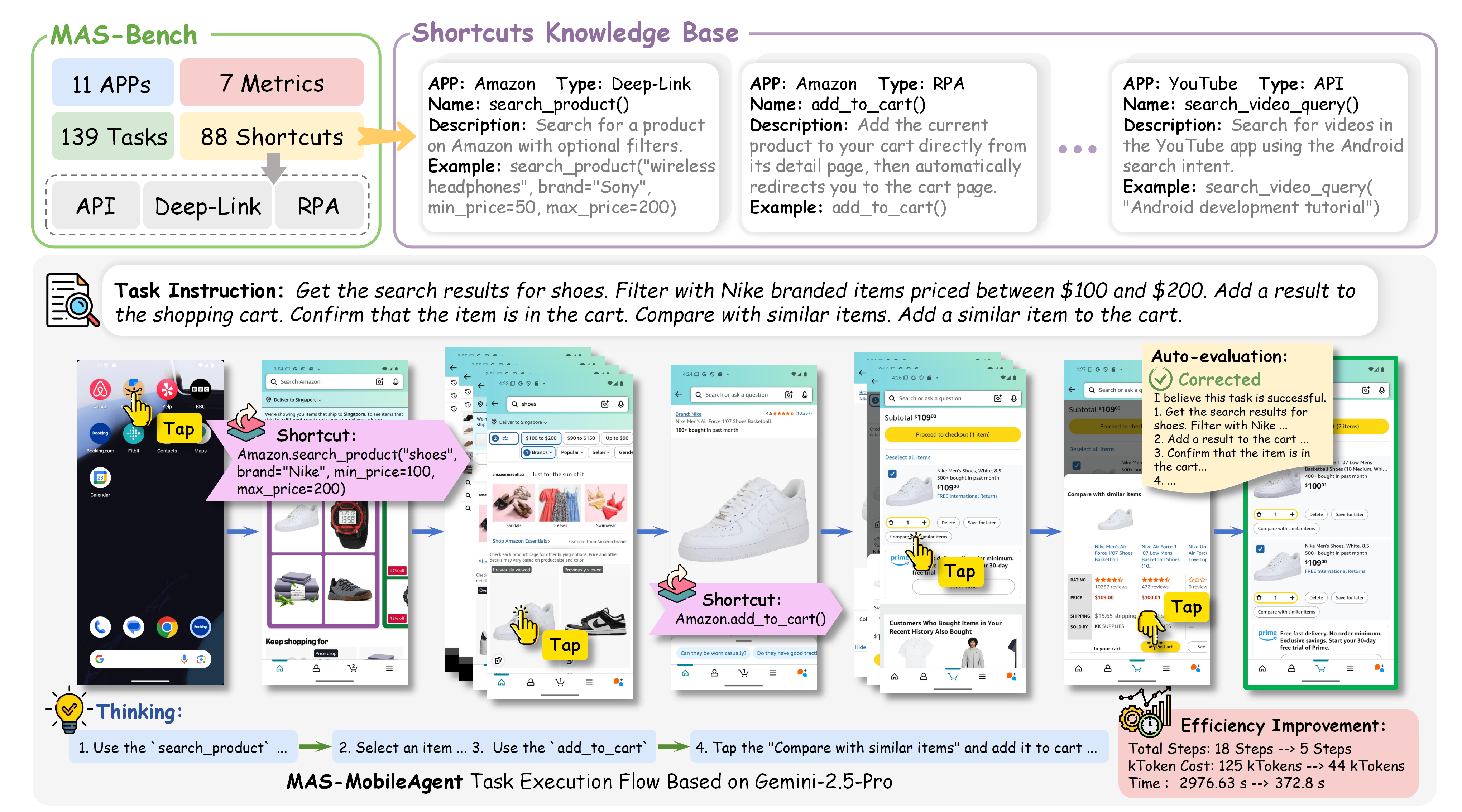 MAS-Bench: A Unified Benchmark for Shortcut-Augmented Hybrid Mobile GUI AgentsPengxiang Zhao*, Guangyi Liu*, Yaozhen Liang, and 8 more authorsarXiv preprint arXiv:2509.06477, 2025
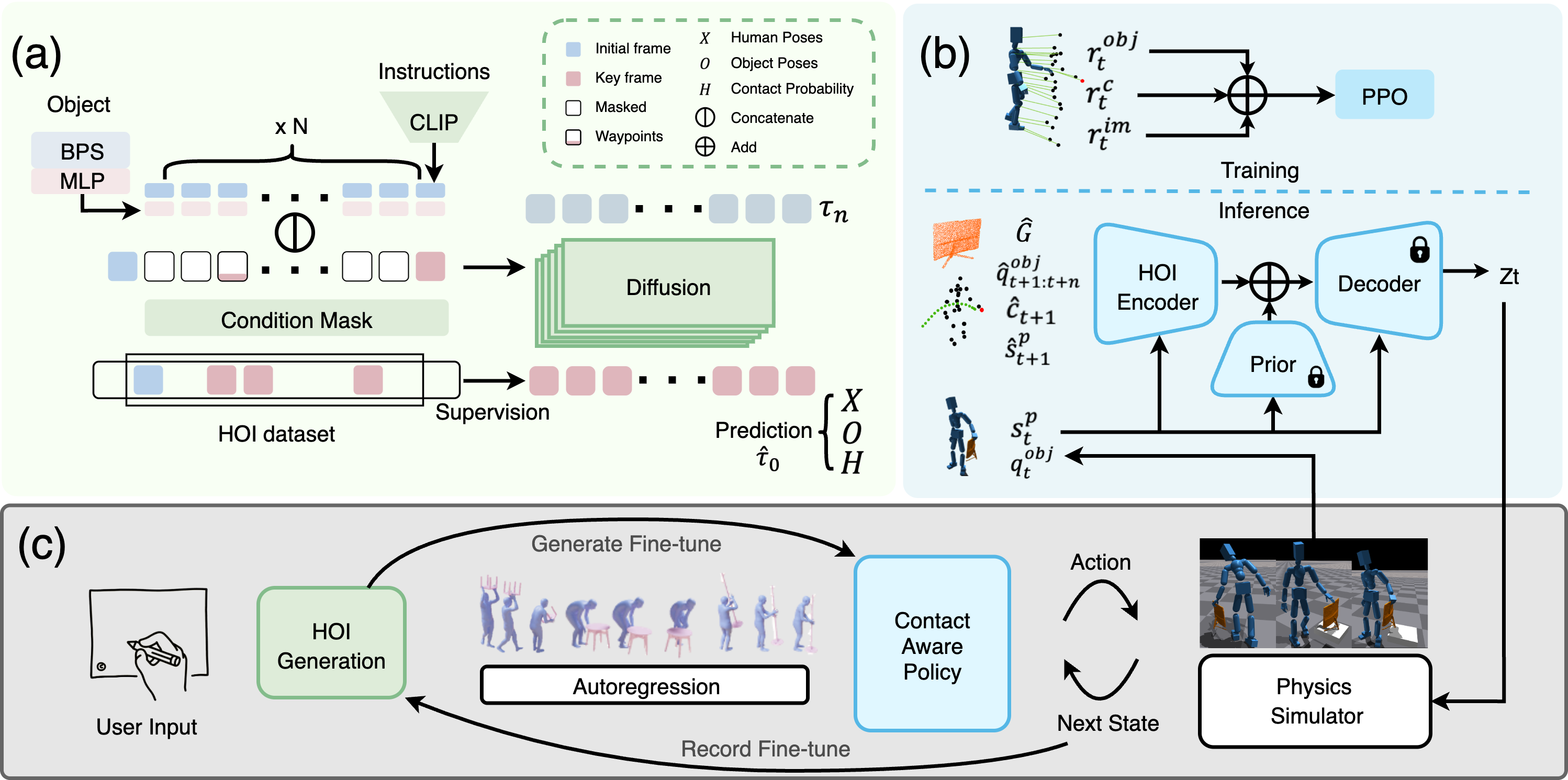 SimGenHOI: Physically Realistic Whole-Body Humanoid-Object Interaction via Generative Modeling and Reinforcement LearningYuhang Lin, Yijia Xie, Jiahong Xie, and 5 more authorsarXiv preprint arXiv:2508.14120, 2025
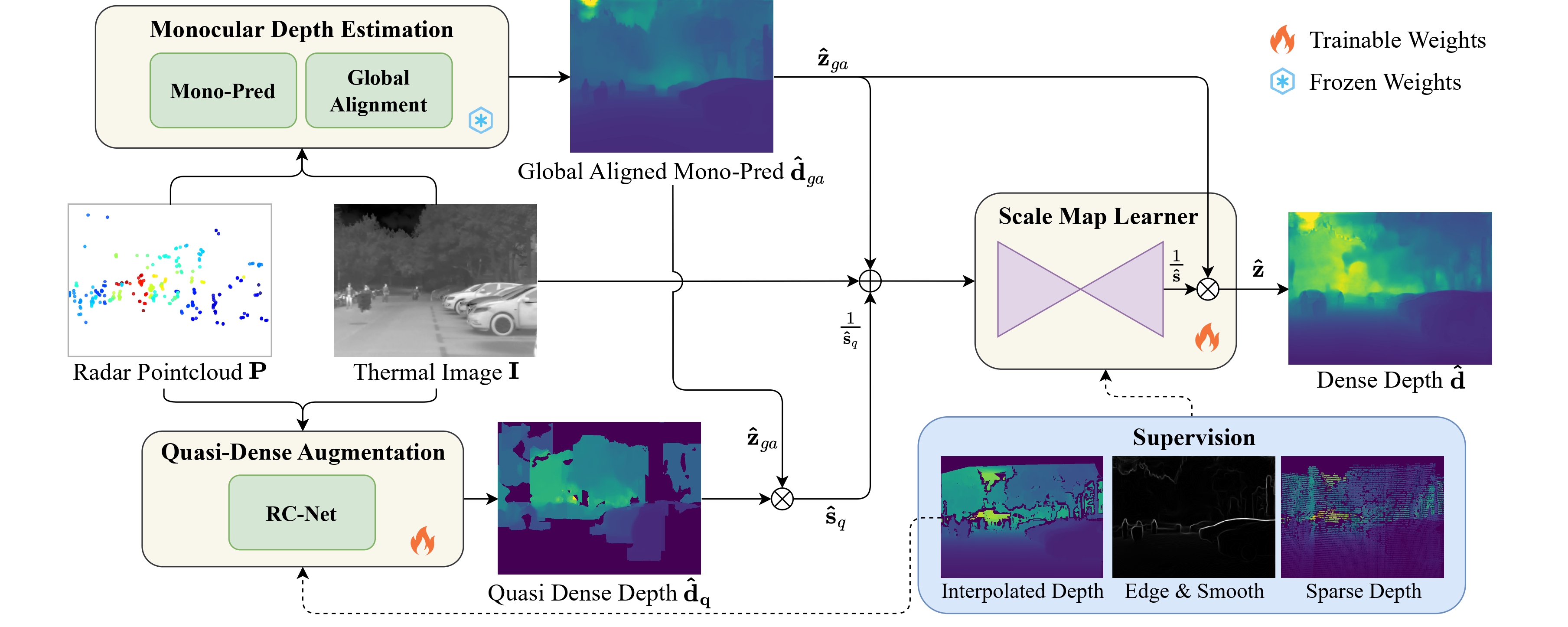 RIDERS: Radar-Infrared Depth Estimation for Robust SensingHan Li*, Yukai Ma*, Yuehao Huang, and 4 more authorsIEEE Transactions on Intelligent Transportation Systems, 2024
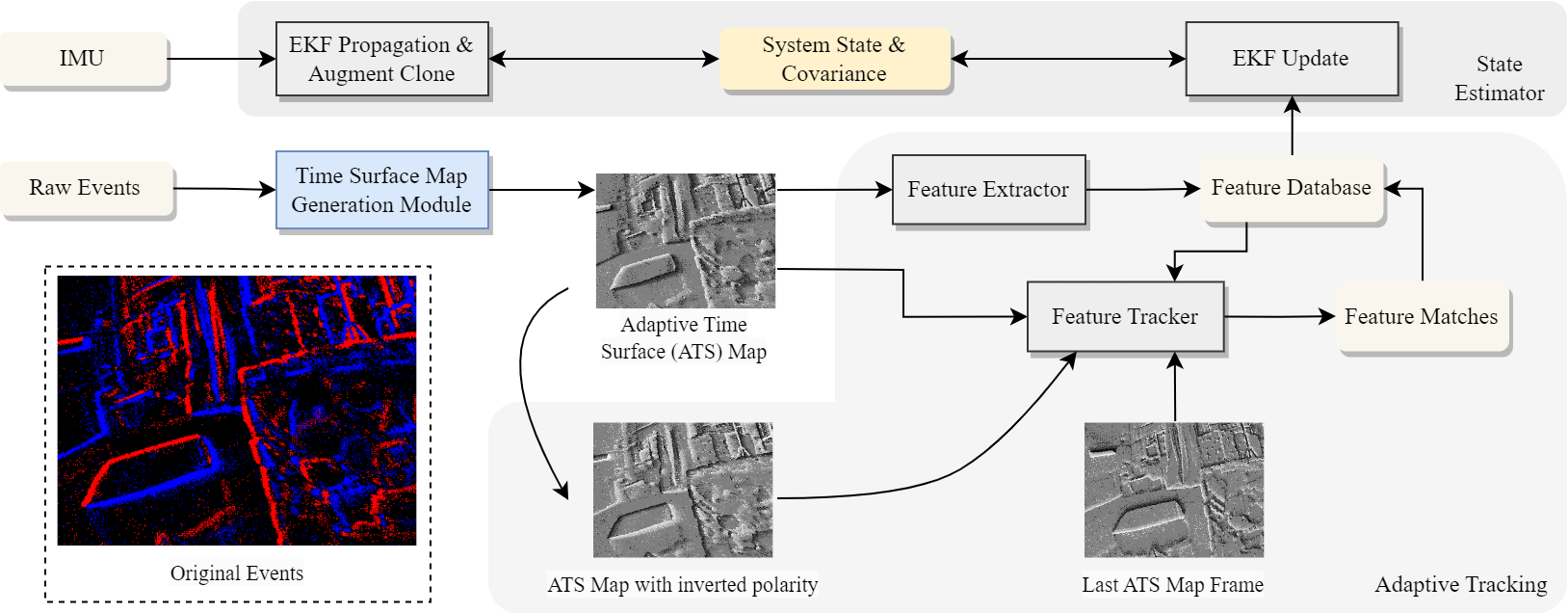 Monocular event-inertial odometry with adaptive decay-based time surface and polarity-aware trackingKai Tang, Xiaolei Lang, Yukai Ma, and 4 more authorsIn 2024 IEEE/RSJ International Conference on Intelligent Robots and Systems (IROS), 2024